

Current Position:Guangdong MEKOO Pipeline System Co., Ltd>News>New>Central heating is now in some southern cities! Southerners no longer rely on shaking for heating?
Release Time:2020-08-18 14:52:31 Views:times
"Northerners rely on heating for winter, and southerners rely on uprightness for winter." "You are like spring in the northern heating, and I froze into popsicles under the clear sky in the south."...As the people’s living needs increase, in recent years, every time In the cold winter, heating in the south has become a hot spot of social concern.
At present, some cities in the north have begun to centralize heating. The reporter's investigation found that in some southern cities, the situation of "heating by shaking" in winter has changed significantly. In recent years, some urban areas in cities such as Wuhan, Hefei, and Changsha have begun to provide central heating in winter, and some cities are planning and constructing heating projects.
Some southern cities have begun to centralize heating, and new urban areas are the focus
In the 1950s, China delineated a central heating demarcation line with the “Qinling-Huaihe River” near 33 degrees north latitude as a boundary. The cities on the north of the demarcation line were unified by the government to build a central heating system. The reporter's investigation found that in recent years, central heating has also begun to appear in some areas south of the "heating line" such as Wuhan, Hefei, and Changsha.
According to Wang Lei, director of the Municipal Public Management Division of the Hefei Urban and Rural Construction Bureau, currently, Hefei Thermal Power Group has 189 districts with central heating, 115,000 residents, and a heating area of 25 million square meters. The heating area has covered Hefei. The main urban area and three major development zones.
In Wuhan, Hubei, several districts close to thermal power plants in Wuchang area have now enjoyed central heating. Wuhan will also deploy a large-scale cogeneration unit in the western part of Hankou and Hanyang area, and the heating area can radiate to Dongxihu District, Qiaokou District and Wuhan Development Zone.
Yangzhou, Jiangsu Province has increased the construction of heating pipe network, and many residential areas such as Phoenix Waterfront in the Slender West Lake Scenic Area will realize centralized heating.
Some urban central heating projects are under planning and construction. Jiangbei New District, a national-level new district in Nanjing, is building multiple water intake pumping stations and energy stations. It is planned to officially centralize heating for public buildings such as Jiangbei Civic Center and Service Trade Building in early 2020. In the next few years, some communities in the central area of the new district will also use river water source heat pumps for central heating.
The reporter's investigation found that currently, the southern central heating areas are mainly economically developed provincial capital cities. Due to the difficulty and high cost of laying heating pipes in old urban areas, central heating is mostly used in newly built urban areas.
According to reports, only Hefei in Anhui Province has truly achieved large-scale central heating. The other six central heating cities use waste heat from power plants to heat individual communities with a small coverage.
It is understood that most of the central heating plans in the southern region stay at the municipal level, and few provincial governments have made central heating plans.
The heating fee is charged according to the area of the house, and the energy cost of enterprises is high
The reporter's investigation learned that most central heating areas in the south adopt the method of charging based on area.
In the Lanjing Oasis Community in Wuhan, the reporter learned that the heating fee is charged according to the building area, the unit price is 10 yuan/m²/month, and the unit price is 0.4 yuan/kWh. According to calculations, the heating cost of a family in a heating season is basically around 4,000 yuan.
"The price is basically affordable," said Mr. Li, a resident of Lanjing Oasis. The old house where he lived before had no heating, and he was woken up with thick quilts at night during the winter. The elderly and children in the family also suffered from frostbite. Now the whole family feels more comfortable, and the elderly and children are less sick.
Hefei calculates the heating fee according to the area step, that is, if the building area is less than 144 square meters, the heating price of the first step is 21.5 yuan/square meter; the heating price of the second step is 23 yuan/square meter for the building area of 144 square meters or more Meter.
The reporter learned that southern cities such as Wuhan and Hefei are non-statutory centralized heating areas of the country, and there are no relevant financial subsidies, tax reductions and other central heating support policies. Due to the increase in coal and other energy prices, some heating companies are under greater operating pressure.
Currently, Hefei's central heating energy is mainly coal. In recent years, affected by rising coal prices, the phenomenon of "coal heat upside down" has become serious, which has brought huge cost pressures to heating companies. In 2018, Hefei Thermal Power Group lost 155 million yuan for the year.
Wuhan has been planning to use the waste heat generated by the thermal power plants in Wuchang and Qingshan very early to provide centralized heating and hot water for users in the coverage area by laying the urban heating pipe network. However, due to the tight supply of natural gas and rising coal prices, heating companies are "unprofitable", and the original heating plan has not been fully implemented.
Experts suggest that southern heating should be solved in diversified ways according to local conditions
In recent years, the call for heating in the south has increased. Fang Zhen, vice chairman of the China Urban Heating Association and chairman of Hefei Thermal Power Group, said that in recent years, whenever the two sessions of Hefei City are held, representatives of the National People's Congress and CPPCC members have put forward suggestions and proposals to promote urban central heating.
The relevant person in charge of Yangzhou Urban Construction State-owned Assets Holding (Group) Co., Ltd. told reporters that before starting the construction of central heating facilities in the city, citizens kept calling for consultation, hoping to realize central heating as soon as possible.
However, at the same time, there are also many voices against large-scale central heating in the south.
The person in charge of some urban construction departments believes that the annual heating cycle in the south is short, the utilization rate of central heating facilities is low, and the unified central heating model in the north is not suitable for the south. The reporter randomly interviewed two heating pipes in Hefei City that have been in the community for about 10 years, and found that about 30% of the owners still have no heating.
Among some owners who do not turn on heating, some residents believe that the air conditioner in the home can be switched on and off at any time, and the cost is lower than that of central heating; some believe that the community is small, and the public share of central heating is excessive and unreasonable. In addition, there are some owners who do not move in for a long time and have not turned on heating.
Jiang Yi, an academician of the Chinese Academy of Engineering and director of the Research Center for Building Energy Conservation at Tsinghua University, believes that the temperature difference between indoor and outdoor temperatures in the South is smaller than that in the North, and heating needs vary greatly among different households. If central heating is unified, some rooms may overheat and make people feel uncomfortable. This is the main technical reason why heating should be centralized in the north and scattered in the south.
Many people in the industry believe that southern heating should not simply copy the northern central heating model, and should be resolved in a diversified manner in accordance with local conditions. For example, it is suitable for centralized and unified heating in a community in an area with a concentrated urban population. For some districts where municipal central heating pipelines cannot reach, distributed energy central heating can be adopted. Generally speaking, when the heating radius of the heat source plant exceeds 15 kilometers, the economic benefits and effects of heating will decrease. Residential areas are scattered or there is no central heating pipeline, it is more suitable to use heating equipment such as gas boilers.
“There are many technical routes for heating in the south, and the key is to improve energy efficiency and reduce primary energy consumption.” The relevant person in charge of Nanjing Ganghua Gas Co., Ltd. said that at present, due to the long distance of pipelines and the age of construction, the pipelines often run out of central heating in the north. There is dripping; and the heating is mainly coal-burning, leading to a series of problems such as low heating efficiency, large environmental pollution, and excessive government subsidies. Central heating in the south should avoid going back to the old road in the north, making full use of clean energy and improving heating efficiency.
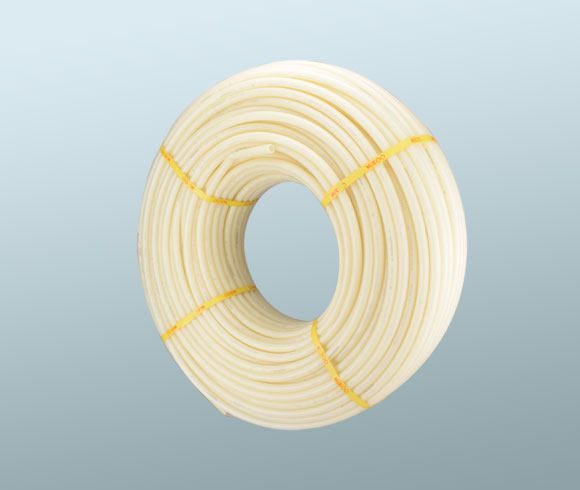
The electron beam radiation cross-linked polyethylene (PE-Xc) tube uses high-energy rays to excite polyethylene molecules to generate free radicals, which combine to generate intermolecular cross-linked bonds, forming a cross-linked structure of polyethylene molecules.

Modification of HDPE by physical method, the formation of cross-linked polyethylene and three-dimensional network structure.In the electron beam irradiation source intensity under certain circumstances, for a certain limit complete modification.
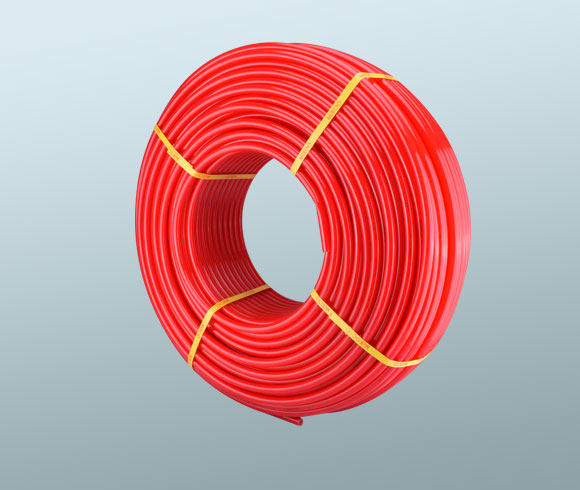
High oxygen barrier type PE-Xc pipe through multi-layer coextrusion technology, the formation of EVOH oxygen barrier layer is uniform in the external pipe.
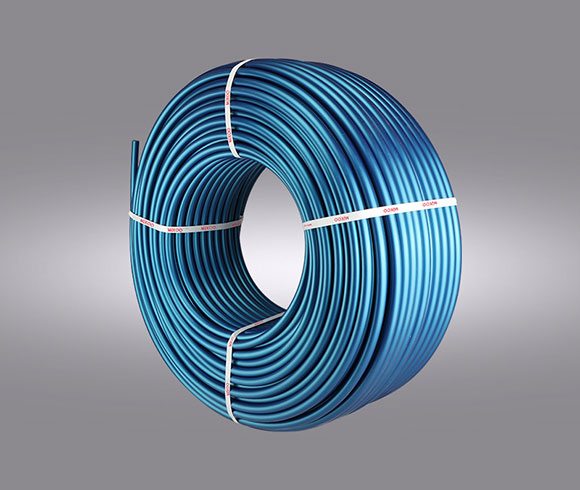
Meigao PE-Xc tube adopts the first domestic co-extrusion irradiation technology to co-extrude the visible light barrier layer and the ultraviolet absorption layer into the tube.1、It can prevent sunlight transmission from oxidizing the water quality, and then avoid the production of bacteria and algae growth that will seriously affect water quality, pipeline transportation and other problems;2、It can prevent the pipes from being exposed to ultraviolet rays in the atmosphere to cause aging, so as to further i
Guangdong MEKOO Pipeline System Co., Ltd. (formerly known as Jilin Meigao Pipeline System Co., Ltd.) was established in 2016 and is engaged in the research and production of pipeline systems. The company has established a technical cooperation relationship with the Changchun Institute of Applied Chemistry of the Chinese Academy of Sciences (founded in 1948 and affiliated to the Chinese Academy of Sciences), and the two sides have carried out project cooperation around pipeline system related technologies. The company was certified as a national high-tech enterprise in 2023.
The company focuses on the production of electron beam irradiation cross-linked PE Xc pipes, heat-resistant polyethylene PE-RT pipes, PP-R pipes and fittings for hot and cold water, water collectors and other products, with complete specifications to meet the needs of different customers. In terms of production facilities, the company is equipped with advanced 3MV and 5MV high-energy electron accelerators, a complete set of German imported multi-layer pipe co extrusion molding equipment, as well as a series of production and quality assurance equipment such as fully automatic online wall thickness and meter weight control system, product defect online grasping system, fully automatic slitting equipment, CNC packaging machine, water pressure and air pressure detection platform, etc., to ensure the efficiency and accuracy of the product production process. The company strictly selects imported raw materials from internationally renowned brands such as Nordic Chemicals and Basel, relies on its own intellectual property technology, and follows Chinese and German standards for production and inspection, providing customers with safe, reliable, and high-performance products. In addition, the company's products are also insured for quality by China Pacific Insurance Company, providing customers with peace of mind. Guangdong MEKOO Pipeline System Co., Ltd. is committed to providing high-quality pipeline system solutions to global customers with excellent products and services, helping the development of the industry and creating a better future together.